High uric acid has more than one line. An NHS lab range can run to 430 µmol/L for a man; crystals can form above about 405; and once gout is diagnosed, the NICE target is below 360. Diet moves it, but by tens of micromoles, not hundreds.
What uric acid level is high: it depends on the yardstick
There are three lines on the UK map and each answers a different question. Type the figure from your report and see it against all three at once; if you type a US-style number in mg/dL, the tool notices and converts it.
Type the uric acid figure from your blood test
The one on your report, in µmol/L. Before you press, decide whether you would call it high. Then we set it against the three yardsticks UK sources use.
We checked the pages that rank for high uric acid in the UK on 23 September 2026. None of the three we measured gives a single figure in µmol/L, the unit printed on every NHS report. Two give no number at all; the third gives US ranges in mg/dL.
The UK lines are all public. The Gloucestershire Hospitals pathology service lists an adult range of 200 to 430 µmol/L for men and 140 to 360 for women. And NICE's gout guideline sets the treatment target at below 360 µmol/L, or below 300 for people who keep having flares.
Reference ranges are set by each laboratory from healthy people, so yours may differ slightly from Gloucestershire's. The saturation point is 6.8 mg/dL, which is about 405 µmol/L. To convert, multiply mg/dL by 59.48.
Put those two together and something odd appears: a man at 420 µmol/L is inside the lab range and above the target NICE sets for gout. Both are correct. One says your number is common; the other says what it should be once crystals have already formed. Ferritin has the same split between a lab range and a deficiency line.
High uric acid is not gout
Gout is a disease: uric acid crystallises in a joint and it hurts a great deal. High uric acid is a number on a report. Most people who have the number never get the disease, and hardly anyone puts that in figures:
Out of 100 people with high uric acid, how many end up with gout?
No symptoms at the start, followed for decades. Place your bet.
That is why the American College of Rheumatology advises against starting treatment for the number alone, and why NICE's guideline is about people who already have gout. A high result is still worth a conversation, because it can point to kidneys that clear uric acid poorly, which is what creatinine and eGFR measure, or to a medicine. That reading belongs to your GP.
How much diet lowers uric acid
Here the UK is unusually blunt. NICE tells clinicians to explain that “there is not enough evidence to show that any specific diet prevents flares or lowers serum urate levels”. The page in first place for high uric acid, from a US hospital, says the opposite: that a low-purine diet is “the best way” to lower it.
The numbers we do have sit closer to NICE:
| What was measured | How much | Study |
|---|---|---|
| DASH diet, one month, everyone | about −21 µmol/L | Controlled feeding trial, 103 adults |
| DASH diet, those starting at 416 or more | about −77 µmol/L | Same trial, only 8 people |
| Share of uric acid variation explained by diet patterns | ≤ 0.3% | 16,760 people |
| Share explained by common genetic variation | 23.9% | Same 16,760 |
The trial is DASH-Sodium (Juraschek, 2016), with weight held steady and all food provided; we converted its mg/dL results to µmol/L. The diet-versus-genes split is from Major and colleagues (BMJ, 2018), across five US cohorts. Diet moves one person's level a little; it explains very little of why some people run high.
If you are at 480 and a target of 360 has been set, diet alone, in the best case measured, covers well under the whole gap. That is why treatment for gout is usually a medicine, with diet alongside.
What matters most is in the glass, not on the plate
Lists of foods to avoid are drawn up by counting purines. The studies that followed tens of thousands of people for years tell a different story. See how many you get right:
Linked to more uric acid and more gout, or not?
Lentils and spinach
Beer was the drink most strongly linked to gout in the Lancet study: 49% more risk for each daily beer. With sugary fizzy drinks, two or more a day came with 85% more; diet versions were not linked. Fruit juice counted too, despite having almost no purines. The NHS puts it simply: no more than 14 units of alcohol a week and not lots of sugary drinks. Alcohol and sugar also top the European table for lowering triglycerides.
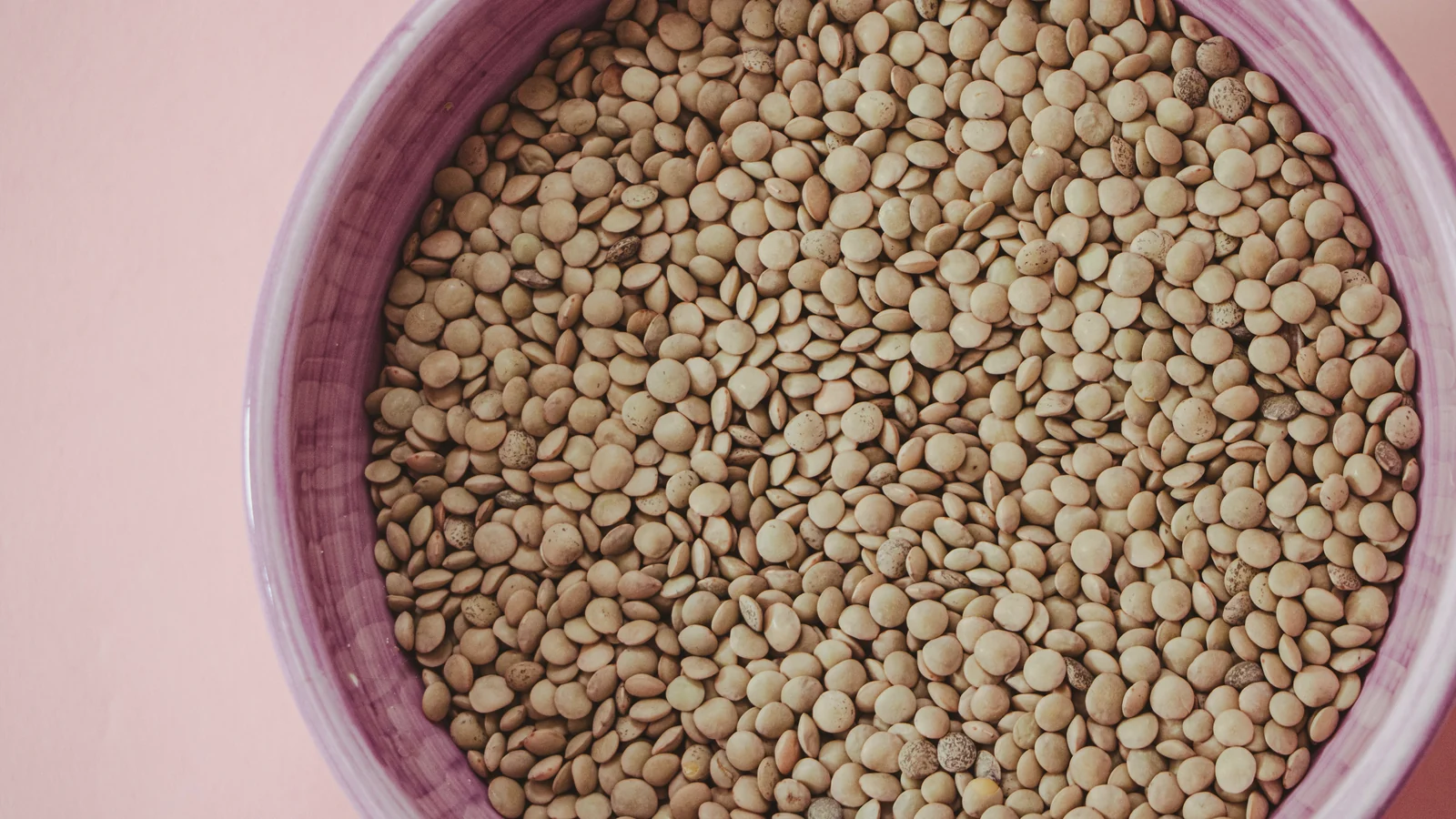
Meat and seafood were linked, less strongly; seafood includes the oily fish the NHS recommends for the heart, which is one more reason to take the result to your GP rather than to a list. Lentils, beans and purine-rich vegetables were not. Lentils are also one of the cheapest sources of zinc in UK supermarkets.
Tomatoes, coffee and cherries
Tomatoes come up in every search. A study of more than 12,000 people found a link so small that one tomato a day works out, by our sums, at about 4.6 µmol/L more. Coffee runs the other way: four or five cups a day went with uric acid about 15 µmol/L lower. An association, not a prescription.
Cherries are where the pages disagree. A UK clinic's blog says they “have been shown to help lower uric acid levels”. The main study, in 633 people with gout, linked eating them over the previous two days with 35% fewer attacks. It did not measure uric acid levels.
When to see a GP
A joint that becomes hot, red, swollen and very painful, often suddenly and often at night, needs to be seen the same day. It is not the stiffness after a long walk or a hard session, which builds over a day or two and spreads across whole muscles. If the high number turned up on a routine test, the question for your GP is not what to stop eating but why it is high and whether anything needs doing. Bring a list of your medicines: some raise it.
The NHS advice everyone agrees on is plain: drink enough, lose weight if you need to but avoid crash diets, and keep alcohol under 14 units. The same logic of reading a number against the right line is in our guides to normal body temperature and high cortisol.
Our view
What we disagree with. Lists of forbidden foods built on purine counts. They cut lentils and spinach, which were not linked to more gout, and let fruit juice through. On what is published, we think that removes good food and leaves alone what weighs most.
What we would do. With a high number in hand, we would take the figure and its unit to the GP, not to a list. In the shop, the one thing we would change without waiting is the drink: sugary drinks for water, and a daily beer for something that is not daily. That is not a treatment; it is what carries most weight in the studies and costs least.
What we do not know. Whether alcohol-free beer raises uric acid. The page in first place says so because of its purines, but we have not found a study that measures it. It may be true; it is not shown.
And what is missing here. There are no prices in this article. Nothing on a supermarket shelf lowers uric acid, and counting purines by brand would repeat the mistake we criticise.
What we do measure in the shops
Yantar compares real supermarket prices. Join the list and we will tell you when the app is ready.
See YantarFrequently asked questions
Sources
14 references consulted for this article, in the order in which they appear.
- Gout: diagnosis and management (NG219), Recommendations
- Uric acid (urate): reference ranges
- Gout
- 2016 updated EULAR evidence-based recommendations for the management of gout
- 2020 American College of Rheumatology Guideline for the Management of Gout
- Effects of the DASH diet and sodium intake on serum uric acid
- Evaluation of the diet wide contribution to serum urate levels
- Purine-rich foods, dairy and protein intake, and the risk of gout in men
- Alcohol intake and risk of incident gout in men
- Soft drinks, fructose consumption, and the risk of gout in men
- Coffee, tea, and caffeine consumption and serum uric acid level
- Cherry consumption and decreased risk of recurrent gout attacks
- The risk of clinically diagnosed gout by serum urate levels (Malmö)
- Harnsäure (uric acid)